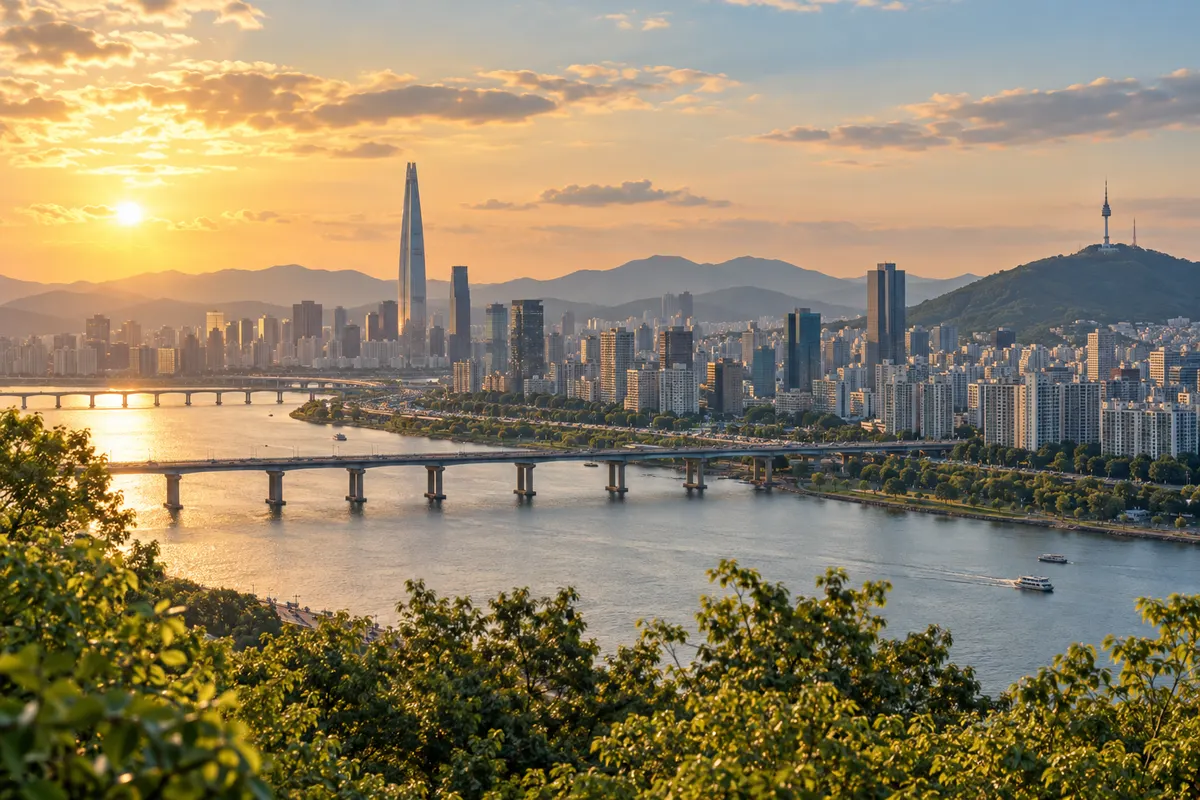
The real question isn't which area is best—it's best for what
Seoul is large enough that where you sleep genuinely changes your daily experience. A hotel in Myeongdong puts you inside one of the city's densest shopping corridors but adds travel time to Hongdae's live music bars. Gangnam feels quieter at street level yet sits on one of the most connected subway interchanges in the city. Hongdae is loud and energetic and well-suited to spontaneous nights out, but it's further from several of the skin clinics that draw medical tourists south of the Han River.
None of these is a flaw. They're tradeoffs, and knowing them before you book saves you from spending half your trip on the subway wishing you'd chosen differently.
Myeongdong: the path of least resistance for first-time visitors
Myeongdong is the neighbourhood most first-time visitors picture when they imagine Seoul—street food stalls, K-beauty shops stacked floor to ceiling, and a tourist infrastructure that genuinely works. The Visit Seoul Myeongdong area guide confirms the density of attractions here: Namdaemun Market, Namsan Seoul Tower, and Myeongdong Cathedral are all within walking distance or a short bus ride.
Myeongdong station sits on Line 4, which connects directly to Seoul Station—the terminus for the Airport Railroad Express (AREX) from Incheon. That single fact matters significantly for arrival logistics. If you land tired and jet-lagged, getting from the airport to your hotel without a transfer is worth something. Our guide to Incheon Airport to Seoul breaks down exactly which options make sense depending on your luggage and budget.
The tradeoff: Myeongdong is busy. Weekends especially can feel overwhelming, and hotel prices in the immediate area reflect the demand. If you need quiet mornings or plan to cook, this isn't your neighbourhood.
Hongdae: the right base if nightlife and creative culture are the point
Hongdae—shorthand for the area around Hongik University—runs on a different clock. The streets around the main club strip don't really get going until late evening, and the neighbourhood's identity is shaped by art students, independent music venues, and a younger crowd than you'll find in Myeongdong or Gangnam.
For travellers whose itinerary centres on live music, club nights, or the indie café scene, staying in Hongdae removes the problem of last-train anxiety. Seoul subway last-train times vary by line, station and direction, and taxis from Gangnam back to Hongdae after a night out add both cost and waiting time. Being already there is simply easier.
Hongdae station is served by Line 2, the Airport Railroad, and the Gyeongui-Jungang Line, making it one of the better-connected hubs in the western part of the city. Airport access from Hongdae is actually straightforward—the AREX stops there—though the journey is longer than from Seoul Station. Day trips to the palaces in Gyeongbokgung or shopping in Insadong require a subway change but are manageable.
The honest downside: if your trip includes beauty appointments south of the Han River, check the route from your exact Hongdae accommodation before booking. That's fine for one appointment; it adds up across a week.
Gangnam: practical for beauty appointments and business, quieter than its reputation
South of the Han River, Gangnam is polished and relatively calm at street level compared to Myeongdong. The area has a concentration of upscale hotels, the restaurants skew upscale, and Gangnam is widely associated with dermatology and cosmetic clinics, including around Apgujeong and Cheongdam; verify each provider’s current address before planning.
For travellers combining tourism with skin treatments or aesthetic appointments, proximity matters. Clinic consultations often run back-to-back, and post-procedure, you may not want to navigate a long subway journey. If that describes your trip, staying in Gangnam is a practical decision rather than an indulgent one. You can explore providers by area to see which clinics are clustered where before you commit to a neighbourhood.
Gangnam station sits at the intersection of Line 2 and the Sinbundang Line, with good onward connections across the city. Getting to Myeongdong or the northern palace district takes cross-city travel; use the route planner for your exact stations—doable, but worth factoring into daily plans. Airport access requires either a bus or a subway journey with at least one transfer, which is less convenient than the AREX options available from Hongdae or Seoul Station.
Subway access: the practical backbone of any Seoul stay
Seoul's subway system is extensive, affordable, and generally reliable. The Seoul Metro official site has an English-language route planner that's worth bookmarking before you travel. All three neighbourhoods have good subway access, but the lines they sit on differ in ways that affect daily movement:
- Myeongdong (Line 4): Direct to Seoul Station and the AREX; good north–south coverage.
- Hongdae (Lines 2, AREX, Gyeongui-Jungang): Strong airport connection; Line 2 loops around much of the city.
- Gangnam (Line 2, Sinbundang): Solid cross-city reach once you're south of the river; airport access less direct.
A T-money card loaded with enough credit for your stay handles fares across all lines and buses. Our Seoul subway guide covers the card setup and transfer rules in detail.
How tourist support infrastructure compares
Myeongdong has the most visible tourist infrastructure of the three areas. English-language signage is widespread, and the city operates tourist information centres across Seoul—with multilingual staff, transport assistance, and local recommendations available at each location. Hours and addresses for all centres are listed in the Visit Seoul tourist information centre directory, which is worth checking before you arrive since opening times can vary by location.
Hongdae and Gangnam are both navigable without Korean, but the tourist support layer is thinner. In Gangnam especially, some restaurants and smaller shops may have limited English menus. Translation apps close most of that gap, but it's worth knowing before you arrive.
Matching neighbourhood to trip type
Rather than ranking these areas, it's more useful to match them to specific trip patterns:
- First visit, limited time, want to see the main sights: Myeongdong or a central location near Seoul Station gives you the easiest starting point.
- Nightlife, live music, younger crowd: Hongdae is the clear choice, and the airport rail link softens the arrival logistics.
- Beauty clinic appointments, upscale dining, quieter base: Gangnam makes daily logistics simpler if your schedule is clinic-heavy.
- Longer trip covering multiple areas: Consider splitting your stay—two or three nights in one neighbourhood, then moving. Seoul hotels are generally easy to book in shorter blocks.
A note on prices and what changes
Hotel rates across all three areas fluctuate with season, Korean public holidays, and major events. Myeongdong tends to price at a premium for its location convenience. Gangnam's luxury tier is genuinely expensive; budget options exist but require more searching. Hongdae has the widest spread, from guesthouses to mid-range hotels, which suits travellers watching costs. Prices and availability shift, so treat any specific figures you find online as a starting point rather than a guarantee.
If beauty appointments are part of your Seoul itinerary, SeoulBeautyTrip lets you filter providers by neighbourhood before you book accommodation—useful when clinic location should influence where you stay rather than the other way around.
Frequently asked questions
Is Myeongdong or Hongdae better for a first trip to Seoul?
Myeongdong is generally easier for first-time visitors because of its tourist infrastructure, central location, and direct subway link to the airport rail at Seoul Station. Hongdae is a better fit if nightlife and the arts scene are your main reasons for visiting, even on a first trip.
How long does it take to get from Gangnam to Myeongdong by subway?
Roughly 30–40 minutes depending on your exact start and end points, with at least one line change. The Seoul Metro route planner gives accurate journey times for specific stations.
Can I get from Hongdae to Incheon Airport without transferring?
Yes. The Airport Railroad Express (AREX) stops at Hongdae (Hongik University) station, so you can reach Incheon Airport directly without changing lines. Journey time is longer than from Seoul Station, but the convenience of a single train is significant with heavy luggage.
Official sources
Explore current providers in Gangnam
Continue from this guide to the current listings below. Check the exact services, location and enquiry options on each profile. This is a directory selection, not a quality ranking or confirmed availability.
 Acupuncture Hyunginjae Gangnam Diet KoreaGangnamView current menus, photos and location →
 BONECURE Korean Medicine ClinicGangnamView current menus, photos and location →
 ELEV ClinicGangnamView current menus, photos and location →
 Glovi G-Thera Anti-Aging ClinicGangnamView current menus, photos and location →
 Glovi Plastic SurgeryGangnamView current menus, photos and location →
 Inobell ClinicGangnamView current menus, photos and location →