What a Korean Pharmacy Actually Sells
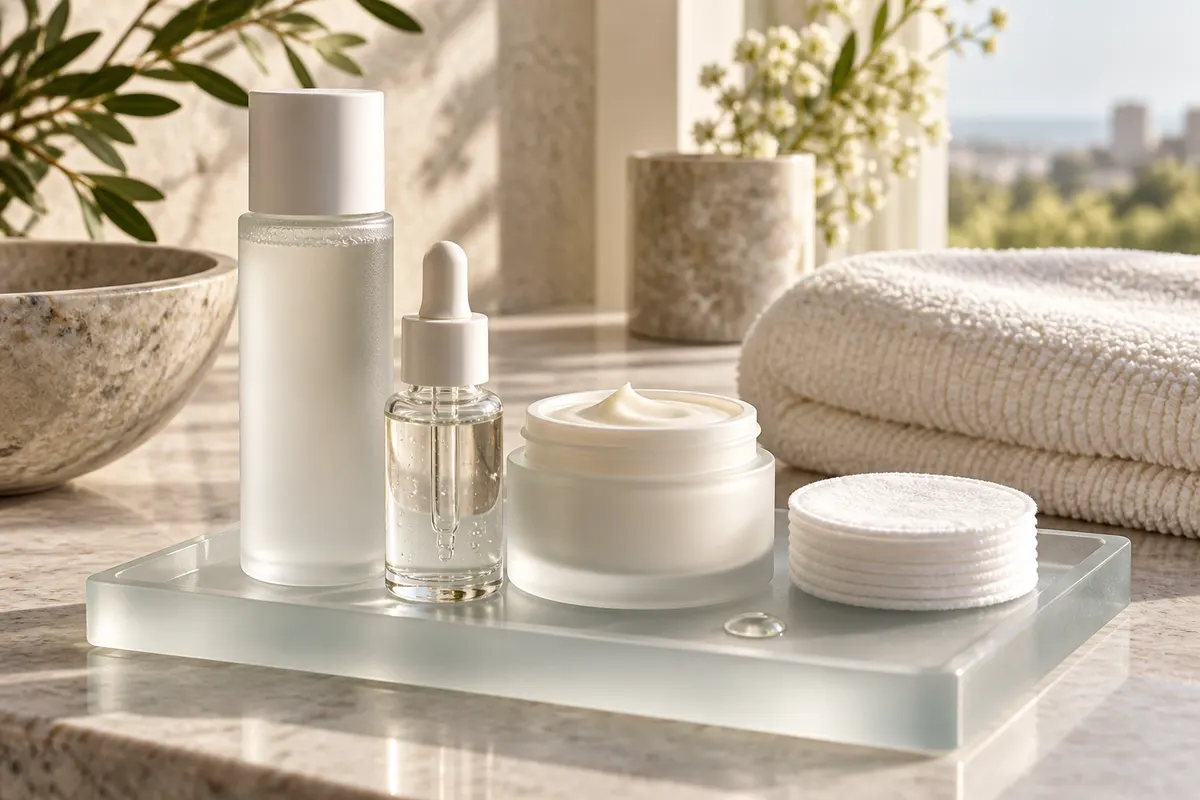
While beauty stores like Olive Young dominate Seoul's shopping streets, Korean pharmacies (yakguk, 약국) operate under an entirely different model for skin treatments. A licensed yakguk stocks medicines and medicated preparations that beauty retailers do not carry. What can be supplied without a prescription varies, so ask the pharmacist rather than relying on a product list online. The pharmacist is a qualified professional, not a sales assistant, and that distinction matters when your skin concern goes beyond choosing a new serum.
For a mild, limited skin concern, a pharmacist can advise on available medicines and whether to seek medical care. Rashes, eczema, acne, infections and allergic reactions can look similar but may need different treatment, so do not rely on self-diagnosis or an online product list.
Pharmacy vs Olive Young: A Practical Comparison
Olive Young and similar beauty chains carry cosmetics, sheet masks, sunscreens, toners, and over-the-counter supplements. The staff are knowledgeable about trends and ingredients, but they are not licensed to recommend treatments for medical skin conditions. A pharmacist can explain which products are available without a prescription and check whether a medicine may be suitable after you share your symptoms, allergies, current medicines, and pregnancy or breastfeeding status. Availability depends on the exact ingredient, strength and formulation, so do not assume that a named product or drug class is sold over the counter. If you want to browse K-beauty trends and stock up on crowd-favourite products, the beauty retailer is the right call. For a mild, limited symptom, a pharmacy may be an appropriate first stop, but suspected infection or a significant allergic reaction needs prompt medical assessment.
Price points differ too. Pharmacy products tend to be functional rather than beautifully packaged, and that is reflected in the cost. You are paying for the active ingredient and the pharmacist's guidance, not the branding.
Finding an English-Speaking Pharmacy in Seoul
English fluency varies considerably between pharmacies, and this is worth planning around rather than hoping for the best. Myeong Pharmacy in central Seoul is specifically listed by Korea Tourism Organization as a resource for foreign visitors and has staff with English communication ability — a useful starting point if you are not confident navigating a language barrier for a medical matter. VISITKOREA maintains a directory of pharmacies that can assist international visitors, and it is worth checking before you travel.
In tourist-heavy districts — Myeongdong, Hongdae, Itaewon — basic English is more common. In residential neighbourhoods it is less reliable. A practical workaround is to write down your symptoms or use a translation app to show the pharmacist text in Korean. Most pharmacists will make a genuine effort to help even without shared language, but for anything involving dosage or drug interactions, clarity matters too much to leave to guesswork.
What to Bring With You
Preparation makes a real difference. Before visiting a pharmacy for a skin concern, gather the following:
- A list of any medications you are currently taking, including supplements, with generic names where possible
- The name of any known allergies, written in both English and Korean if you can manage it
- The product that caused a reaction, or a photo of its ingredient list
- A clear description of when the problem started and how it has changed
If you are bringing prescription medication from home into Korea, the rules around controlled substances are strict. The Ministry of Food and Drug Safety publishes specific guidance on which medicines require prior declaration and what documentation travellers must carry. Checking this before departure is not optional if your medication falls into a controlled category — the consequences of getting it wrong at customs are significant.
How to Ask About Non-Prescription Options
Product classifications differ between countries and can change. Instead of travelling with a list of medicines gathered from social media, show the pharmacist a clear description or photo of the concern and ask what can legally be supplied without a prescription.
Seek medical assessment for persistent or severe acne. Seek urgent medical assessment if a rash is spreading, painful, hot, swollen, blistering or oozing, or if you have fever or feel unwell. Call 119 for trouble breathing or swallowing, swelling of the lips, tongue or throat, faintness, or another rapidly worsening reaction. A pharmacy can help with many everyday questions, but it is not a substitute for diagnosis.
When to Seek Medical Care
A pharmacist can answer medicine questions, but diagnosis and prescription treatment require a clinician. Seek medical care sooner for worsening or severe symptoms, suspected infection, eye or mouth involvement, or an unclear diagnosis; do not wait an arbitrary number of days. Antibiotics, retinoids and other prescription medicines should be used only after appropriate assessment and according to the product's Korean prescription status. Topical and oral retinoids should not be used during pregnancy or when planning pregnancy; tell the clinician and pharmacist if you are pregnant, could be pregnant or are breastfeeding.
Seoul has a high concentration of dermatology clinics, many of which are accustomed to seeing international patients. Clinic costs vary by provider and treatment. Check the current price and consultation terms before booking. If you are considering a procedure rather than just a prescription, it is worth taking time to research options properly. You can compare Seoul skin clinics to get a clearer picture of what different facilities offer before committing. If you want to compare professional services with pharmacy products, browse current provider profiles before deciding what kind of appointment you need.
Practical Tips for the Pharmacy Visit
Pharmacies in Korea are identified by a green cross sign. Operating hours vary by pharmacy and location. Some pharmacies operate outside standard hours. Use a current local search or ask your accommodation to locate an open pharmacy. Confirm available payment methods before purchase.
If a pharmacist recommends a product you are unfamiliar with, ask them to write the name in Korean characters as well as any usage instructions. This makes it easier to look up the product later or to describe it to a doctor if needed. Do not buy more than you can carry home comfortably — some medicated products face import restrictions in other countries, and declaring them correctly at your home customs is your responsibility.
For broader context on where pharmacy products fit within Seoul's skincare landscape, the Seoul skincare shopping guide covers the full range of retail options across different neighbourhoods and product categories.
Knowing Which Resource Fits Your Concern
It is easy to arrive in Seoul with a long shopping list and spend the entire trip in beauty stores. That is a perfectly reasonable way to travel. Pharmacies provide medicines and pharmacist counselling that beauty retailers do not, while clinics provide diagnosis and medical treatment. If you are unsure whether a concern is cosmetic or medical, ask a pharmacist or clinician rather than trying to diagnose it yourself. The useful distinction is simple: choose a beauty store for cosmetics, a pharmacist for medicine questions and a clinic when the concern needs medical assessment.
Frequently Asked Questions
Do I need to speak Korean to use a pharmacy in Seoul?
Not necessarily, but it helps to be prepared. Writing down your symptoms, bringing the product that caused a reaction, and using a translation app significantly reduces the communication barrier. In central tourist districts, basic English is more common. For dosage, interactions, allergies, pregnancy or breastfeeding, do not rely on guesswork or machine translation alone. Ask the pharmacist to confirm the product name, strength and directions in writing, and use professional interpretation or medical care if you cannot communicate safely.
Can I buy prescription skincare products like tretinoin at a Korean pharmacy without a prescription?
No. Products classified as prescription-only in Korea require a prescription. Do not assume that another country's classification applies to the exact ingredient, strength or formulation; ask a Korean pharmacist to verify it. Tretinoin and other retinoids should not be used during pregnancy or when planning pregnancy, and treatment should be discussed with a clinician. Confirm clinic fees, language support and follow-up before attending.
Are there restrictions on bringing Korean pharmacy products back home?
Yes, and they vary by country. Some medicated creams and oral medications are subject to import restrictions or require declaration at customs. Check the rules for your home country before purchasing, and keep any receipts or packaging that identifies the product clearly. The MFDS guidance on controlled medicines is a useful reference for the Korean side of the equation.
Official Sources
Explore current providers on Seoul Beauty Trip
Continue from this guide to the current listings below. Check the exact services, location and enquiry options on each profile. This is a directory selection, not a quality ranking or confirmed availability.
 Acupuncture Hyunginjae Gangnam Diet KoreaGangnamView current menus, photos and location →
 BEAF ClinicGangseoView current menus, photos and location →
 BONECURE Korean Medicine ClinicGangnamView current menus, photos and location →
 DELVE CLINICHongdaeView current menus, photos and location →
 ELEV ClinicGangnamView current menus, photos and location →
 Glovi G-Thera Anti-Aging ClinicGangnamView current menus, photos and location →