Why the Market You Choose Matters More Than You Think
When planning a trip, the traditional markets Seoul visitors actually recommend can make or break your itinerary. Operating days and hours vary, and the best choice also depends on where the rest of your day is centred. Picking the wrong one—say, arriving at Noryangjin at noon expecting a lively auction floor—means a quieter, less rewarding experience than you'd hoped for. The sections below match each market to the kind of visit it actually suits.
Gwangjang Market: The Street Food Benchmark
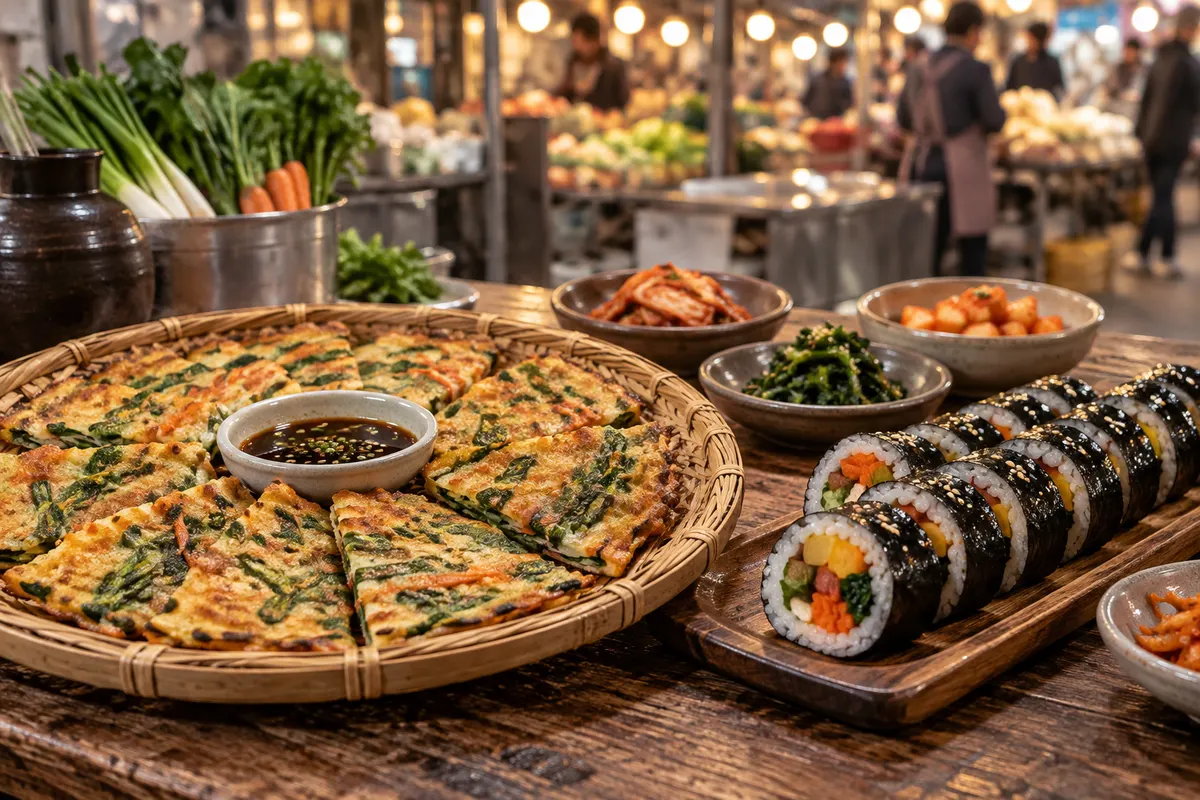
If eating is the main point, Gwangjang is the market most visitors mean when they picture Seoul street food. The covered arcade along the central alley is lined with stalls selling bindaetteok (mung bean pancakes), mayak gimbap, and raw yukhoe beef. Seating is communal and informal—you sit at the stall where you order, which makes it easy to try two or three things without committing to a full meal.
Gwangjang is widely featured in travel media, so the inner food hall gets shoulder-to-shoulder by mid-morning on weekends. Prices at stalls nearest the entrance have crept up accordingly. Go on a weekday or arrive before 10 a.m. if you want a quieter look. For a detailed breakdown of what to order and which stalls to prioritise, the Gwangjang Market food guide covers the specifics.
Namdaemun Market Seoul: Scale, Variety and a Renovation to Know About
Namdaemun Market Seoul is one of the largest traditional markets in the country, operating for over 600 years near the old city gate. Clothing, kitchenware, eyewear, dried goods, children's items—the range is broad enough that it functions as a genuine commercial hub rather than a tourist set piece. The street food here leans toward kalguksu (knife-cut noodle soup) and hotteok (sweet filled pancakes), both worth stopping for.
One concrete thing to know before you visit: the Seoul Metropolitan Government has been running a significant modernisation project at Namdaemun, repositioning it as a heritage destination while upgrading infrastructure. Some sections may be under renovation or reorganised compared to older travel guides. Check current conditions before planning a long shopping session, because the layout you find may differ from what you've read elsewhere.
Location is a genuine advantage. Namdaemun sits close to Myeongdong and Deoksugung Palace, so it fits naturally into a central Seoul day without a dedicated trip. If you're comparing it directly with Gwangjang, the key distinction is purpose: Namdaemun rewards browsing and practical purchases; Gwangjang rewards eating.
Mangwon Market Seoul: The Neighbourhood Option
Mangwon Market Seoul is a smaller, covered daily market in Mapo-gu that operates primarily as a local food market—fresh produce, banchan side dishes, tofu, fish, and prepared foods that residents actually buy for dinner. It doesn't have the tourist infrastructure of Gwangjang or Namdaemun, which is precisely its appeal for visitors who want to see how a working neighbourhood market functions.
The practical case for Mangwon is strongest if you're already planning to spend time in the Hongdae or Hapjeong area. It's a short walk from Mangwon station and pairs well with an afternoon in that part of the city. The Hongdae and Mangwon route maps out a half-day that makes the geography work. Going out of your way solely for Mangwon is harder to justify unless the low-key, local atmosphere is specifically what you're after.
Tongin Market Seoul: The Dosirak Lunch Experience
Tongin Market in Jongno-gu is best known for a specific activity: buying old-style brass coins at the market office, then using them to collect small portions from different food stalls and assemble your own dosirak (lunchbox). It's a structured, interactive way to try multiple dishes—tteok, japchae, jeon—in small amounts.
The dosirak lunch system operates during specific hours, and Tongin is relatively compact. Check current operating information before visiting. It's located near Gyeongbokgung Palace and Seochon Village, which makes it a natural lunch stop on a palace-and-hanok day. The experience is genuinely charming, but it's worth being honest: Tongin is a single-activity destination. If the coin lunch system isn't running when you arrive, the market itself offers less reason to linger than the larger alternatives.
Noryangjin Fish Market: Go Early or Adjust Expectations
Noryangjin Fish Market operates around the clock, but the wholesale auction that makes it famous runs in the early morning hours. Arriving after 9 or 10 a.m. means the auction floor is quiet and many of the most interesting stalls have already sold their best stock. The market is still functional later in the day—you can buy fresh seafood and have it prepared at an upstairs restaurant—but the atmosphere is considerably different from the pre-dawn scene.
The market moved to a new building in 2016, and some long-term visitors find the new space less atmospheric than the old one. That's a subjective call, but worth knowing. If a live seafood meal is the goal rather than the spectacle of the auction, Noryangjin remains a solid choice at any hour. Getting there is straightforward on the subway (Noryangjin station, Line 1 or 9), and a T-money card makes the journey simple.
Gwangjang vs Namdaemun Market: The Direct Comparison
These two come up together often enough to deserve a direct answer. Choose Gwangjang if eating is the priority and you want a concentrated, atmospheric food experience in a single covered space. Choose Namdaemun if you want variety across goods and food, prefer a market integrated into a broader central Seoul itinerary, or want to see a market that functions as a genuine commercial hub rather than primarily a food destination.
They're not interchangeable. Gwangjang has more character per square metre for food; Namdaemun has more practical range. Both are accessible by subway and neither requires more than half a day unless you're shopping seriously.
Hours, Closures and the Variable-Hours Problem
This is the detail that catches visitors most often. Korean traditional markets frequently close on specific days of the month (often the 2nd and 4th Sunday, or every Sunday, depending on the market), and individual stalls set their own hours independently of any posted schedule. A market listed as open may have a third of its stalls shuttered on a given morning.
A few practical habits help:
- Check the official Visit Seoul listings close to your travel date rather than relying on older blog posts.
- Arrive with a backup plan—a nearby café or alternative neighbourhood—so a partially closed market doesn't derail the day.
- For food-focused visits, aim for late morning on a weekday when stalls are fully stocked and crowds are manageable.
Prices and specific stall offerings change frequently. Any figures you find online should be treated as approximate rather than current.
FAQ
- Which Seoul traditional market is best for first-time visitors?
- Gwangjang is the most straightforward choice for a first visit focused on food and atmosphere. Namdaemun suits visitors who want a broader range of goods alongside street food and are already spending time in central Seoul.
- Are Seoul's traditional markets easy to reach by public transport?
- Yes. Gwangjang (Jongno 5-ga station), Namdaemun (Hoehyeon station), Mangwon (Mangwon station), Tongin (Gyeongbokgung station) and Noryangjin (Noryangjin station) are all on the subway network. A T-money card covers all fares and is the most convenient way to move between them.
- Do I need cash at traditional markets in Seoul?
- Most individual stalls and small vendors still prefer or require cash. Larger stalls at well-touristed markets like Gwangjang increasingly accept card payment, but carrying Korean won in small denominations remains the safer approach.
Official Sources
Explore current providers on Seoul Beauty Trip
Continue from this guide to the current listings below. Check the exact services, location and enquiry options on each profile. This is a directory selection, not a quality ranking or confirmed availability.
 Acupuncture Hyunginjae Gangnam Diet KoreaGangnamView current menus, photos and location →
 BEAF ClinicGangseoView current menus, photos and location →
 BONECURE Korean Medicine ClinicGangnamView current menus, photos and location →
 DELVE CLINICHongdaeView current menus, photos and location →
 ELEV ClinicGangnamView current menus, photos and location →
 Glovi G-Thera Anti-Aging ClinicGangnamView current menus, photos and location →