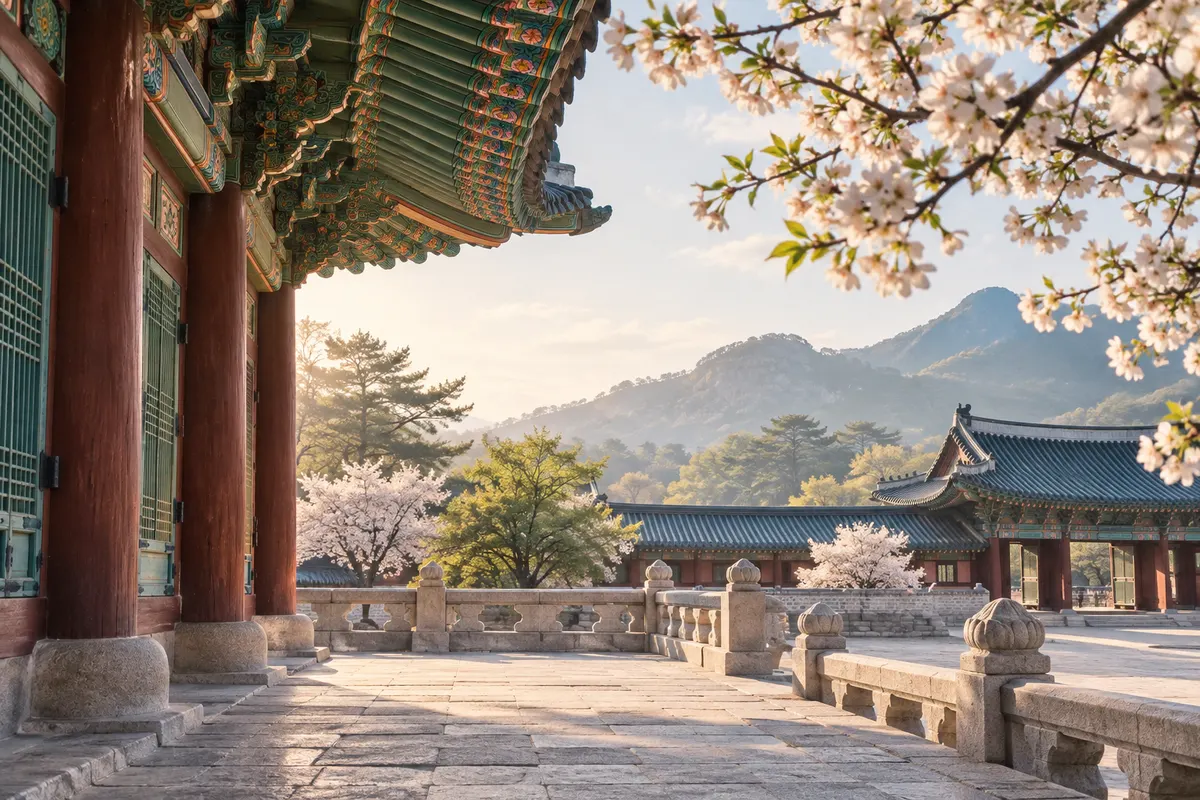
The Order of Stops and Why It Matters
Gyeongbokgung Palace and Bukchon Hanok Village sit close together on the map, but the sequence in which you visit them has real consequences. Bukchon is a residential neighbourhood with timed access restrictions on its most photographed alley. Starting at the palace when it opens, walking north through Samcheong-dong at a relaxed pace, and reaching Bukchon's upper alleys well before 5 PM keeps the route coherent and keeps you on the right side of the rules.
Gyeongbokgung or Anguk: Choosing Your Starting Station
The choice depends on one fact: Gyeongbokgung Palace is closed every Tuesday. On any other day, leave Gyeongbokgung Station and follow signs for the Gwanghwamun Gate entrance. Entering from the south gives you the full ceremonial axis — Gwanghwamun, Heungnyemun, Geunjeongmun — before you reach the main throne hall.
On Tuesdays, or if you are arriving later and want to reverse the route, start at Anguk Station and follow signs toward Bukchon. From Anguk you can walk into Bukchon first, then descend through Samcheong-dong toward the palace's east entrance. Be aware that entering from the east side removes the ceremonial approach entirely. Always verify the current opening schedule on the official Gyeongbokgung Palace website before you travel, since seasonal hours and special closure dates change without much notice.
Pacing Your Time Inside the Palace
The grounds include Gyeonghoeru Pavilion, Hyangwonjeong Pond, the National Folk Museum and the National Palace Museum of Korea — the last two have separate admission considerations. The palace grounds are extensive, so decide in advance whether to focus on the main ceremonial buildings or add one museum.
If you want to see the Changing of the Royal Guard ceremony, check the current schedule on the official site. Performance times vary by season and are suspended in certain weather conditions. Resist the urge to linger until midday. The Samcheong-dong and Bukchon section rewards an earlier arrival, both for quieter alleys and better light.
Walking North: The Samcheong-dong Corridor
After leaving the palace through the north gate (Sinmumun) or the east gate, you enter Samcheong-dong — a long, gently sloping street with galleries, small cafés and independent shops. It is the natural bridge between the palace and Bukchon, largely flat until you begin climbing toward the upper hanok alleys.
Samcheong-dong is a practical place to eat before the Bukchon section. Food options inside the residential lanes are limited, and eating or drinking loudly in the alleys is actively discouraged. Plan your meal here rather than later.
Bukchon's Residential Character
Bukchon Hanok Village is not a reconstructed attraction. The tile-roofed houses along Gahoe-dong and the surrounding lanes are private homes. Residents have lived with tourist foot traffic for years, and the noise, photography through gates and general disruption have made daily life difficult. Seoul Metropolitan Government introduced formal management rules in November 2024 after voluntary guidance proved insufficient.
Keep voices low. Do not photograph through the gates or walls of private homes. Stay on the designated walking paths shown on the official Bukchon Hanok Village walking tour map. Some of these expectations are now enforceable rules, not suggestions.
The Red-Zone Access Restriction
Since November 2024, the area around Bukchon View Point 2 — the steep alley on Gahoe-dong that appears in most photographs of the neighbourhood — has been designated a Special Management Area. According to the official Seoul Metropolitan Government notice, tourist access to this red zone is prohibited between 5 PM and 10 AM. The city's current official notice states that visitors found there during restricted hours face a fine of KRW 100,000; check the notice again before visiting because local rules can change.
The practical visiting window is 10 AM to 5 PM. If you follow this route starting at the palace, you should comfortably arrive within that window. If you start late or spend a long time at the palace, check your watch before heading up the alley. The restriction applies regardless of weather or season. Signage and monitors are present, and the rules are actively enforced.
Sunday Considerations and Crowd Patterns
Sundays bring noticeably larger crowds to both sites. The Changing of the Royal Guard ceremony, when scheduled, draws additional visitors to the palace forecourt. In Bukchon, the narrow alleys become congested quickly on weekend afternoons — uncomfortable for visitors and more disruptive for residents.
A weekday morning, particularly Wednesday through Friday, tends to be quieter. If Sunday is your only option, aim to be at the palace gate when it opens and reach Bukchon's upper alleys before noon. Avoid the restricted alley in the late afternoon, when crowds peak and the 5 PM cut-off approaches quickly.
Rain Days and Mobility Alternatives
Heavy rain makes the steep stone lanes of Bukchon slippery and uncomfortable. On wet days, the palace grounds are still worth visiting — many of the main halls have covered corridors — but the Bukchon alley walk becomes less rewarding and more hazardous.
A practical rain alternative is to focus the morning on the palace and the National Palace Museum of Korea, which is indoors, then take the subway one stop to Anguk and visit Insadong's covered arcade or the Bukchon area's small galleries rather than the open alleys. Visitors with mobility limitations should note that the Gahoe-dong alley is steep with uneven stone paving. The lower sections of Bukchon and the Samcheong-dong street are considerably more accessible. The National Palace Museum of Korea is a good indoor option if the alley walk is not feasible.
If you are building this into a longer trip, a 3-day Seoul itinerary can help you distribute these sites across days so that a rain day does not collapse your entire plan.
Continuing Onward: Seochon and Insadong
After Bukchon, some visitors cross back through the palace area toward Seochon, the neighbourhood west of Gyeongbokgung. It has a quieter hanok streetscape — flatter lanes, a strong independent café and bookshop culture, and fewer tour groups than Bukchon. The Visit Seoul Seochon guide covers the main streets and points of interest.
Heading south from Anguk toward Insadong is the other natural continuation, leading to some of Seoul's most established traditional markets in Seoul, which pair well with a morning spent at the palace.
Seasonal Tradeoffs
The palace grounds look markedly different across seasons — cherry blossoms in spring, deep shade in summer, foliage in autumn, snow on the tile roofs in winter. Spring and autumn are the busiest periods. Summer heat and humidity make the long walk through the grounds tiring by midday. Winter mornings are cold but often uncrowded. Each season involves genuine tradeoffs. A Seoul season guide can help you weigh those against your travel dates before you book.
Frequently Asked Questions
Can I visit Bukchon View Point 2 in the evening?
No. The red-zone area around Bukchon View Point 2 on Gahoe-dong is restricted to tourists between 5 PM and 10 AM under rules introduced in November 2024. Visiting outside the permitted window carries a fine of 100,000 Korean won. Plan to arrive before 5 PM.
What happens if Gyeongbokgung is closed on the day I visit?
The palace is regularly closed on Tuesdays. If Tuesday is your only available day, start at Anguk Station and visit Bukchon and Samcheong-dong in the morning, then consider Changdeokgung Palace — a short walk away — as an alternative, subject to its own schedule. Check the official palace website for current closure dates before your visit.
Is this route suitable for visitors with limited mobility?
The palace grounds have some accessible paths, though the full site is large and partly uneven. The Gahoe-dong alley in Bukchon is steep with stone paving and is not suitable for wheelchairs or those with significant mobility difficulties. The Samcheong-dong street and lower Bukchon areas are more manageable. The National Palace Museum of Korea, located within the palace grounds, is a good indoor alternative if the alley walk is not feasible.
Official Sources
- Gyeongbokgung Palace — Official Schedule and Visitor Information (Korea Heritage Service)
- Notice on Restrictions for Tourist Visits to Bukchon Special Management Area (Seoul Metropolitan Government, November 2024)
- Bukchon Hanok Village Walking Tour Map (Seoul Metropolitan Government)
- Seochon Neighbourhood Guide (Visit Seoul)
Explore current providers on Seoul Beauty Trip
Continue from this guide to the current listings below. Check the exact services, location and enquiry options on each profile. This is a directory selection, not a quality ranking or confirmed availability.
 Acupuncture Hyunginjae Gangnam Diet KoreaGangnamView current menus, photos and location →
 BEAF ClinicGangseoView current menus, photos and location →
 BONECURE Korean Medicine ClinicGangnamView current menus, photos and location →
 DELVE CLINICHongdaeView current menus, photos and location →
 ELEV ClinicGangnamView current menus, photos and location →
 Glovi G-Thera Anti-Aging ClinicGangnamView current menus, photos and location →